The International Year of the Woman Farmer has highlighted the important yet often overlooked contributions of women in agriculture.
Women pioneered refrigeration for transporting food, developed dryland irrigation, and discovered corn mutations that make more productive and resilient seed varieties possible. Today, women lead some of the nation's largest private agriculture companies and operations, advocate for the industry, and shape public agriculture policies. They operate farms to provide for their families, support the economy, and contribute to the nation's food security.
Recognizing women's leadership, innovation, and contributions to agriculture not only honors their accomplishments but also helps inspire a new generation of women who see a place for themselves in the agricultural industry.
The growing presence of women in agriculture
While women have always been part of agriculture, their numbers and roles are expanding. According to the 2022 USDA Census of Agriculture, more than 1.2 million women farm, accounting for more than 36% of producers in the United States and 29% of principal operators.
Women were involved in nearly 60% of farms. They also accounted for more than half of producers who identified themselves as beginning farmers, illustrating their importance to the industry's future.
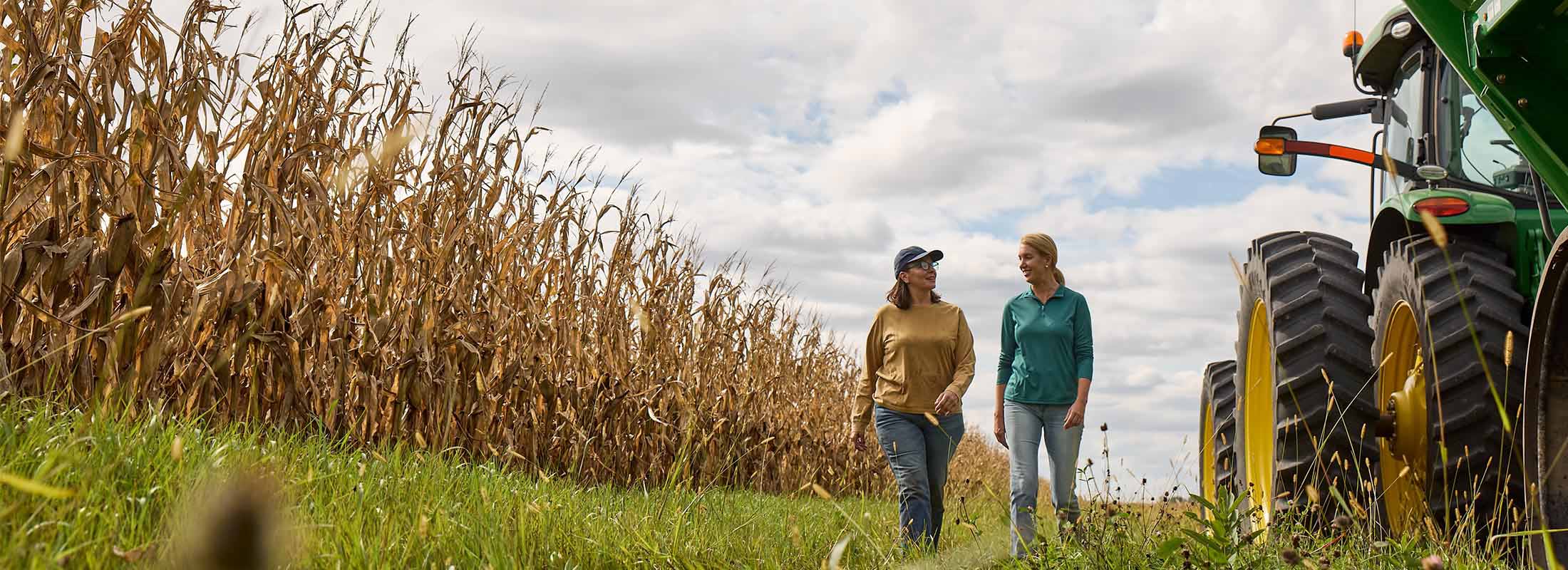
Kelli Berg, a Director on the Farm Credit Services of America (FCSAmerica) Board, started Berg Farm Enterprises in Early, Iowa, with her husband, Josh. As beginning producers, the Bergs had to learn every aspect of the business firsthand. Because they focused on doing what needed to be done, "traditional" roles never dictated their division of labor.
This, Kelli says, "gave me the opportunity to contribute across all areas of the farm, helping build my confidence as both a producer and a leader." She uses her experience to encourage others to look for and take advantage of opportunities to lead: "You don't have to have everything figured out before you step forward. You never know how your willingness to take a chance, contribute your perspective, or lead will open doors for you and inspire the women who come after you."
The evolving role of women in farming
Historically, many women worked alongside family members in the fields, cared for livestock, maintained records, and managed household and farm responsibilities. This work helped keep an operation running, even when formal ownership or management titles did not reflect a woman's involvement.
Today, women are increasingly recognized as owners, operators, and decision-makers. Their responsibilities may include overseeing production, negotiating land agreements, developing marketing strategies, managing employees, and making decisions about capital investments.
From monitoring cash flow and managing operating expenses to evaluating financing options and preparing for major purchases, women often play a central role in maintaining the financial health of an agricultural business.
Women are also helping guide conversations about succession planning and the transfer of agricultural operations between generations. As families consider the future of their farms and ranches, daughters, spouses, and other female family members are taking active roles in decisions about ownership, management, and long-term business continuity.
"I’ve sat in on garage gatherings with the next generation, and their conversations impress me. We have a lot to look forward to by watching what they accomplish," says Susan Voss, a FCSAmerica Director, officer and director of BS Farms, Inc., and chair of BS Lands, Inc. Now retired, Voss served farm families as a certified public accountant whose work included succession planning.
She advises thinking broadly about how you can impact the agriculture industry: "There is a wide highway to success in operations, management, marketing, finance, technology, education, agribusiness, including maintenance, manufacturing and retail, professional services, and, yes, even political careers that support this industry into our future."
Challenges and opportunities for women in agriculture
Even as women's contributions are recognized, challenges remain, access to farmland and other resources among them.
Comparing those coded as the primary operator in the 2017 Census of Agriculture, men reported an average of 488 acres versus an average of 228 acres reported by women. The value of that farmland and the buildings was nearly double for men's operations compared to women's—$1.6 million versus $870,000. Machinery values followed a similar trend; men reported average machinery valued at $150,000, while women reported $63,000 in machinery.
While resource challenges are not unique to women, they are more pronounced on average, and recognizing where barriers exist can help the agricultural industry better support the next generation of producers and business leaders.
Professional connections can also make a difference. Mentorship programs, agricultural organizations, and networking opportunities provide women with access to experienced producers, industry specialists, and peers facing similar decisions.
"Get involved in your commodity’s support groups and grow into the responsibility spaces," Voss advises. "While volunteering with the Cattlemen, as an example, you will pick up gold nuggets of information from your peers. Our land-grant colleges and other ag-related organizations have mega-resources that are free, yet priceless. Use them. Ask questions. Do your homework. Use the knowledge of your suppliers and other professionals. Learn business acumen. Attend educational opportunities."
Resources and opportunities for women in ag
Organizations such as American Agri-Women and Women in Agribusiness offer opportunities for professional networking, leadership development, and engagement with agricultural issues. These organizations connect women from different areas of the industry, including production agriculture, agribusiness, research, and education.
Women in Ag conferences and regional networking events provide opportunities to learn from fellow producers and agricultural professionals. Educational resources are available through agricultural associations, industry organizations, and university extension programs, which host Annie’s Project with support from FCSAmerica. These programs can help women develop practical skills in areas ranging from production management to financial planning and business development.
Sponsorships
We provide financial support to customers who attend workshops that qualify for reimbursement. These can include education centered on a variety of topics, including problem-solving, recordkeeping, decision-making, business planning, and business continuity.
Looking ahead: The future of women in agriculture
The International Year of the Woman Farmer is a reminder that the contributions of women in agriculture are not a recent development. They are part of the industry's history and an essential part of its future.
As agriculture continues to evolve, recognizing the women who have helped sustain it—and supporting those who will carry it forward—remains an important part of strengthening the industry for generations to come.