Piece by piece, Chris and Jason Sylte have built a farming operation across six states. Each location and enterprise adds a layer of resiliency.
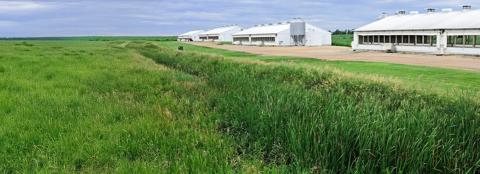
Their latest venture, a commercial sow facility that complies with California Proposition 12’s space requirements for swine barns, is being built on the brothers’ land outside their hometown of Ipswich, South Dakota. From idea to construction, the hog facility offers a window into the Syltes’ strategy of diversifying for the growth and resiliency of their business and community.
"We want to leave things better than we found them, and we want to leave something that's lasting and makes things better. That’s our goal.
"
A Growth Mindset Rooted in Risk Management
Chris understood risk from his earliest days in agriculture: “When I started, we were farming 1,400 acres. You’d have a storm come up and lose your whole crop for that 12-month cycle. I didn’t like that, even watching it as a kid. If I were going to farm, I wanted to have a crop to harvest. We wanted to farm year-round.”
Chris rented 600 acres at 17, bringing the family farm to 2,000 acres. He also started a custom harvesting business, which he expanded after graduating from college.
Jason began farming at 16, completing college before joining his older brother as an equal partner. From the start, they shared a growth mindset.
“Jason isn’t just my brother,” Chris said. “He’s my best friend. We work together 10 hours a day, six days a week. We don’t argue. We don’t fight. We challenge each other and learn from each other.”
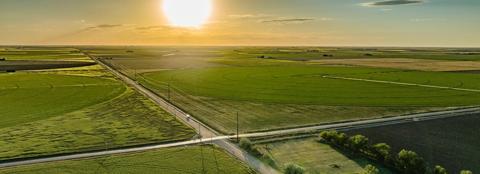
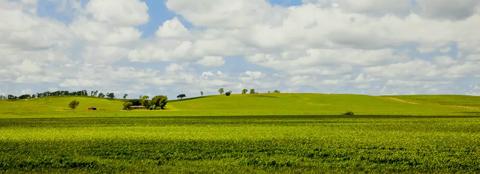
The pair’s first diversification effort took them 100 miles from the farm their father started in 1981. They picked up 1,000 acres and continued to grow. Today, their business is a combination of dry and irrigated cropland spanning the Dakotas south into Texas, Oklahoma, and Arkansas, allowing them to maximize machinery, labor, and growing seasons. They also operate in Missouri and have cattle, grain elevators, trucking, real estate, and most recently, hog facilities.
“You just picture a pie chart,” Jason said. “You’ve got so many pieces of the pie, and you decide how big each piece should be. The goal is that the strong pieces carry the weak ones when needed.”
Sylte Farms is built so “something is always moving,” Chris added. “The hope is that 51% of it is winning at all times.”
Strategies for Building Resiliency
Spread risk. The Syltes’ multi-pronged approach protects their overall operation from single-point failures.
“Our grain farm is split into five states. We have some irrigation to offset drought. We're offset against hail--different weather events,” Chris said. “We balance that all the time.”
Optimize resources. The Syltes’ construction team has worked on parts of the hog barns, reducing the need for outside contractors. This is just one example of how the brothers use resources across their enterprises to maximize labor, equipment, and expertise.
Create opportunity. The Syltes have renovated houses and apartments, built a hotel, and opened a strip mall in their hometown. These efforts help attract and retain employees. Just as important, they create jobs, quality housing, and contribute to community pride.
“I have children involved in the operation, and our employees have been with us for a long time. They all have committed a lot of effort to help us get where we are,” Chris said. “We want them to be able to continue to earn a living if something were to happen to Jason and me.”
The Syltes long ago traded a traditional office for the cab of a pickup—a logistical necessity for an operation of their size and scope. As they travel, the two continually scan the landscape for opportunities, seek feedback from their staff of 50, and identify people who can help them move forward, whether as advisors, peers, or potential additions to their staff.
“We're constantly aware of time, and what that cost is to us, and how we need to find every way possible to short-circuit time to get the desired result—different and faster ways of doing things; a feedback loop from our research and from our employees on better, more efficient ways to do things; faster decision-making skills on Chris’ and my part; better analysis, better information,” Jason said. “Our goal every day is to maximize our time management to give our businesses the maximum return we can get within a quantified time period.”
“We don’t profess to have everything figured out,” Chris added. “We’re always learning, always watching for the next challenge.”
Exploring New Opportunities in Swine
Their first sow gestational facility grew out of conversations with Chris’ brother-in-law, a research veterinarian. Chris was familiar with raising hogs; his father had some on the operation.
The brothers also took note of hog barns being built with financing through Farm Credit Services of America (FCSAmerica). They reached out to their team of lenders at the Association. Chris Ford, a vice president of agribusiness lending whose swine team works with 28 of the 50 largest swine operations in the U.S., was brought into the conversation.
Weighing the pros and cons
The swine industry offers several options for diversifying, each with its own level of risk. The Syltes’ decision to build and own the barns requires significant upfront investment. But the payoff is a steady stream of income from partners, who manage and own the sows. Even if partners were to change over time, Ford said, there is little risk the barns would sit idle.
The Syltes entered the swine industry with an important advantage: biosecurity. South Dakota has become attractive to swine operators for several reasons, Ford said. One of the most important is the state’s wide-open spaces, which allows barns to be placed far enough apart to reduce the spread of disease. Water also is abundant, and a strong grain industry offers a ready supply of feed and end-users for manure.
The remoteness of the Sylte barns offers an additional benefit—space for others in the supply chain to build on what they have started. These types of projects are often followed by a feed mill and finishers, boosting the area's economy and tax base, Ford said.
While the pros of diversification are factors in the Syltes’ final decision, the potential cons shape much of their early discussions and research.
“We don’t ever try to look at things optimistically,” Jason said. “We try to approach it from a standpoint of, ‘How can this fail? What is the worst case, potentially?’ Then we evaluate from there.“
What if ethanol goes away? What if the U.S. overproduces corn and, because of tariffs, enters a no-bid environment? Can you survive? Do you have a lender who will stand by you?
“If it looks like something will succeed under the worst case, then there's a pretty good chance that we are going to make something out of it,” Jason said.
Any major investment takes time. The brothers estimate they spent at least three years researching and weighing their first sow facility, designed for conventional gestation crates.
The decision to build a second facility that houses 12,000 sows was faster, thanks to confidence in a model that gives them ownership of the barns; their partners manage and own the animals. For the Prop-12 project, the Syltes partnered with another farming family and third-party management company.
So far, the hog barns “have been as advertised,” Chris said. This includes:
Monthly lease payments. Steady income from livestock partners offset the cyclical nature of the grain industry.
Manure applications for their fields. “Down the road, our neighbors can benefit from that fertilizer too,” Jason said. “We've expressed our plans to do that.”
Opportunities for their community. Each barn supports roughly two dozen jobs.
The facilities also generate tax revenue for schools and roads—services that Ipswich needs to compete with nearby communities.
"We want to leave our community better than we found it. True success is helping others succeed.
"
“We like the hog barn projects because they’re a tax revenue source for our local community,” he added. “They help create a new workforce, and all of it works together to generate sustainability.”
Lessons in diversification
Play a long game. “Diversification isn’t something you get in and out of,” Jason said. The Prop 12 facility, for example, could be converted to conventional housing for even more hogs if it no longer served its original purpose.
Patience and consistency pay. “You just don't jump in and have it start to work. There are growing pains,” Chris said. “We've found it takes a minimum of five years for a business to stabilize—to get the right people, the right team in place; to get the financing in place and cash flows established.”
Failure is part of doing business. “We’ve had failures. Every businessman does,” Chris said. “You’re got to pick yourself up and try again.”
Success starts with trying. Too many people wait for the opportunity to be exactly right, Chris added. “They can wait their whole life and never take a chance. We feel it’s better to try and fail, because if you never try, you will never have success.”
For Chris and Jason Sylte, growth isn’t about getting bigger—it’s about building stronger. Each decision, from expanding their acres to investing in livestock and community projects, reflects a mindset rooted in resiliency and responsibility. Their partnership with FCSAmerica supports that vision, helping them manage risk, create opportunities, and strengthen the future of their family and community. Piece by piece, the Syltes continue to grow with purpose—leaving agriculture, and the people in it, better than they found it.
Inspired by Sylte Farms’ journey? Connect with our team to explore diversification strategies that fit your goals.